— Author project · A.R. Hayes
The Lost Compass
Follow the development of The Lost Compass from A.R. Hayes’s original manuscript through editorial development, character and world design, storyboard planning, page design and cover concepts.
About this project.
Author: A.R. Hayes. Title: The Lost Compass. Status: work completed by StarBridge Media.
The manuscript extracts and review rounds are illustrative. The concept artwork was created with AI-assisted tools under Starbridge art direction and is marked as concept artwork.
StarBridge Media completed the agreed creative-development work shown on this page: manuscript development, character and world design, storyboards, page layouts and cover concepts. It does not mean the book has been published, or that StarBridge carried out every publishing stage.
Shown with A.R. Hayes’s written permission.
01 Manuscript development
The same story. A stronger read.
We start with what the author wrote. The aim is not to replace their voice, but to find where atmosphere, pacing, character reaction and visual detail can make the scene work harder. The manuscript stays the author’s own.
Before · illustrative opening extract
Chapter One · Opening extract
Lily walked through the old town. It was very quiet and she felt a bit nervous. The houses were tall and the streets were narrow. She heard a noise behind her and turned around quickly. There was no one there. She kept walking, holding the strange compass tightly in her hand. She stopped and looked at the map. The street was empty. Only the wind moved between the roofs. She took a deep breath and continued, her steps quicker now.
As in the original case study, both extracts are illustrative examples of the editorial process, not quotations from the finished manuscript.
After · StarBridge editorial development
Chapter One · A Strange Discovery
Lily moved carefully through the old town, her footsteps echoing on the worn cobbles . The tall, leaning houses pressed in on either side, their dark windows like silent watchers. A faint sound drifted from behind her and she turned sharply — but the street was empty. Clutching the strange compass, she stopped beneath a flickering street lamp. The wind slipped between the rooftops, carrying distant voices. She took a steady breath, tightened her grip and continued, her steps quicker now.
Editor’s notes · Stronger opening atmosphere. Show the tension rather than naming it. Keep the compass central.
02 Character design
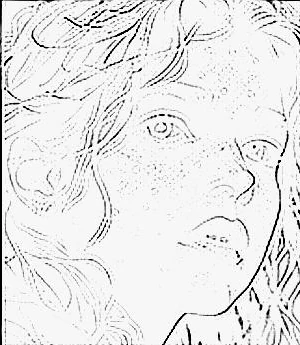
Finding Lily. Then keeping her.
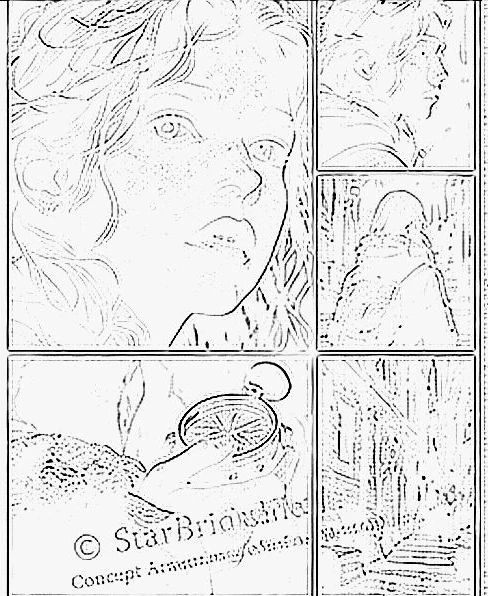
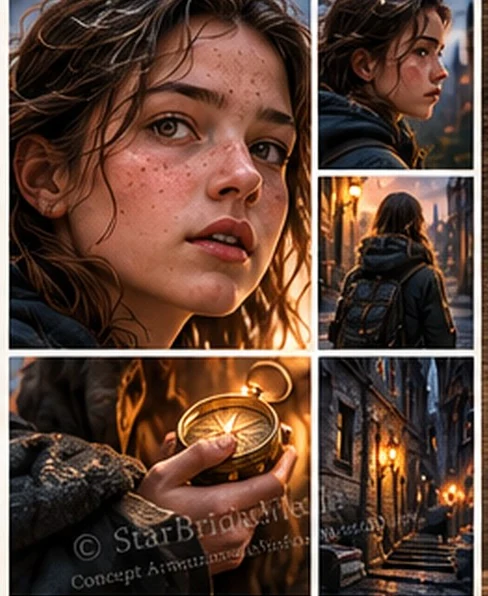
Early studies stay deliberately rough. Once the author approves a direction, that character becomes a set of continuity rules for the rest of the book.
What gets locked after approval?
Same character. Every scene. No accidental redesign halfway through the book.
03 World building
Before the finished art, we map the place.
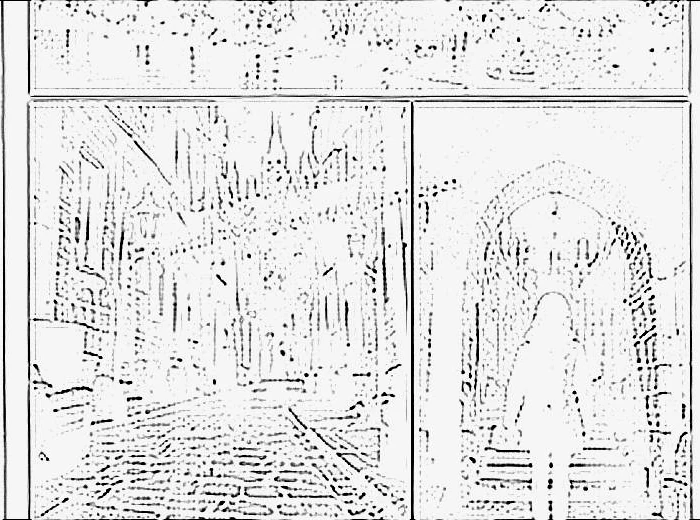
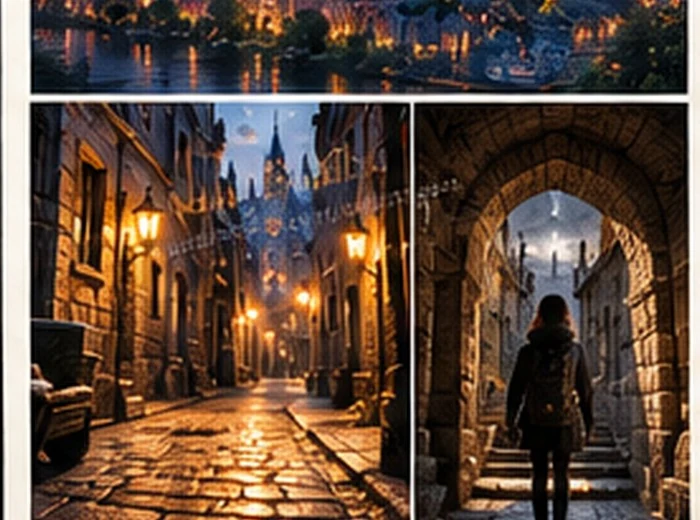
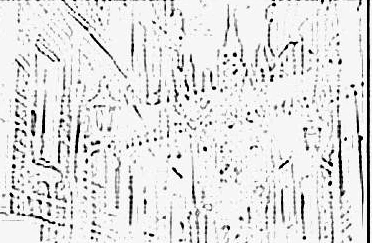
The town is treated as a recurring location, not a disposable background. The bridge, cathedral, streets, lighting direction and the compass must stay recognisable throughout the project.
Development sketch · Shape, architecture, route and mood are explored before final rendering.
Developed environment · A recurring location should still feel like the same place on page 4 and page 40.
04 Storyboard
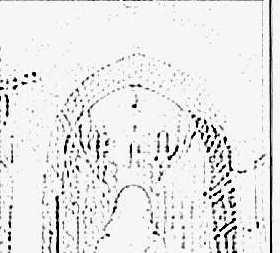
Plan the scene before polishing it.
These are intentionally rough. Storyboards are for decisions: where Lily is, what the reader sees first, when the compass appears and where a page turn earns its moment.
05 Chapter One comparison
What arrived. What it became.
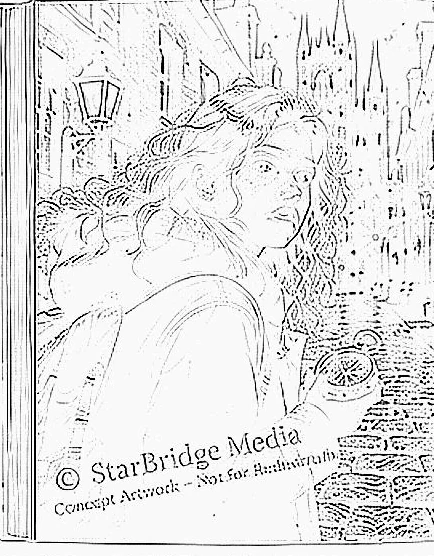
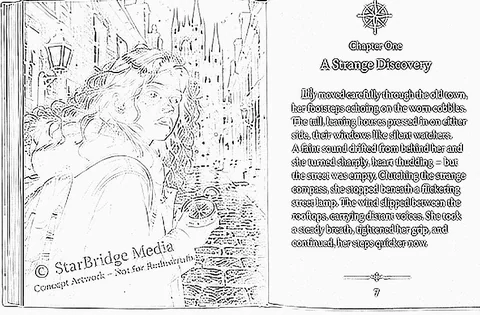
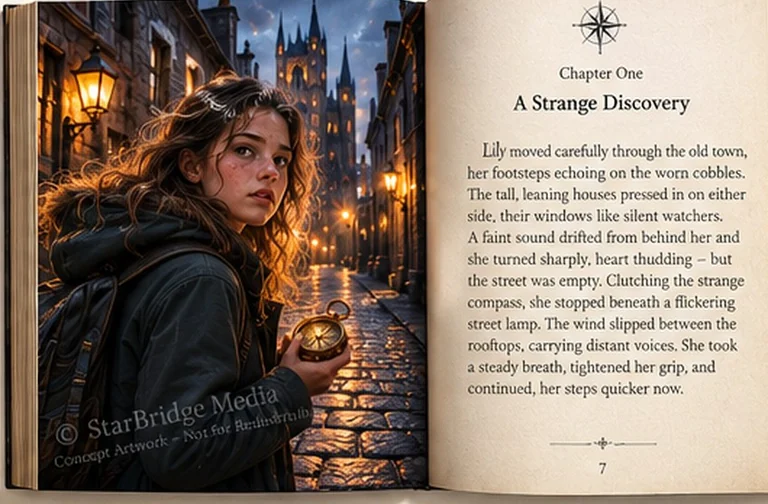
Compare the illustrative opening extract, the StarBridge editorial development and the finished illustrated page.
Chapter One
Lily walked through the old town. It was very quiet and she felt a bit nervous. The houses were tall and the streets were narrow. She heard a noise behind her and turned around quickly. There was no one there. She kept walking, holding the strange compass tightly in her hand. She stopped and looked at the map. The street was empty. Only the wind moved between the roofs. She took a deep breath and continued, her steps quicker now.
Chapter One
A Strange Discovery
Lily moved carefully through the old town, her footsteps echoing on the worn cobbles . The tall, leaning houses pressed in on either side, their dark windows like silent watchers. A faint sound drifted from behind her and she turned sharply — but the street was empty. Clutching the strange compass, she stopped beneath a flickering street lamp. The wind slipped between the rooftops, carrying distant voices. She took a steady breath, tightened her grip and continued, her steps quicker now.
The finished page. Wording can change slightly at page-proof stage as the text is fitted to the page.
06 Page design
A page is not simply a picture with text.
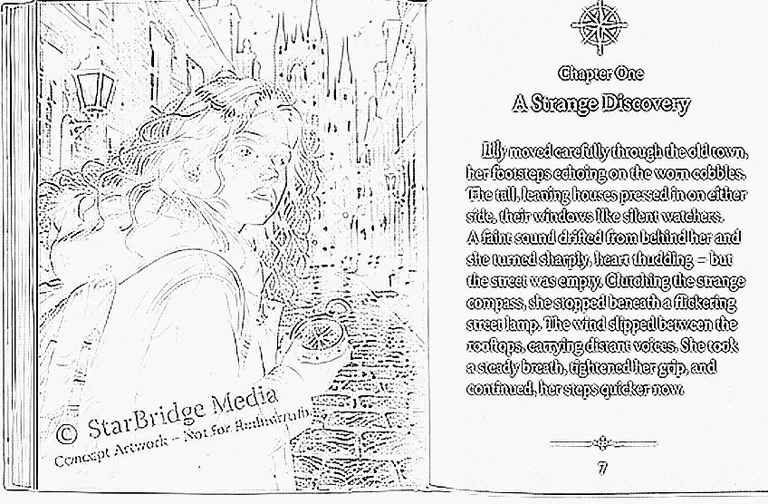
Illustration, typography, margins, page rhythm and empty space all have jobs. This is where the creative material starts behaving like an actual book.
07 Cover concept & studio craft
Digital tools. Human decisions.
Concept jacket · not a published edition
The screen is only part of the process. Manuscript notes, sketches, references, page proofs and author feedback all feed into the decisions that make the final book.
Reference material, sketches, page proofs and digital tools come together around one controlled production process. Concept artwork, not a photograph of the studio.
08 Gallery
Every stage, side by side.
All sixteen pieces of concept artwork from the project. Select any picture to see it larger, then use the arrows or your keyboard to move through them.
The services behind each stage
— Your book
Your Story Could Be Next.
Inspired by what you’ve seen? Discover how StarBridge Media can help bring your manuscript to life through editorial development, illustration, book design and creative production.