Books / Book One / Behind the Book
Behind the Book
How an idea became a finished storyworld.
A finished book hides a lot of unfinished thinking.
Nebula and the Glimmernauts did not arrive fully formed. The finished book grew through writing, visual planning, character decisions, page design, continuity checks, corrections and repeated refinement. This page opens part of that process so readers and future authors can see what happens between an idea and a finished story.
The finished book is only the final layer. Before publication came notes, discarded ideas, visual tests, character decisions, continuity checks, rewritten passages, page experiments and countless small choices.
This is the approach Starbridge is developing for future author projects: understand the story first, then decide what that particular project genuinely needs.
01 Character design
Once a character has an identity, it has to survive.
Once a character has a clear visual identity, that identity has to survive every later illustration. Hair, clothing, colours, proportions, equipment, spacecraft details and personality all become continuity rules.
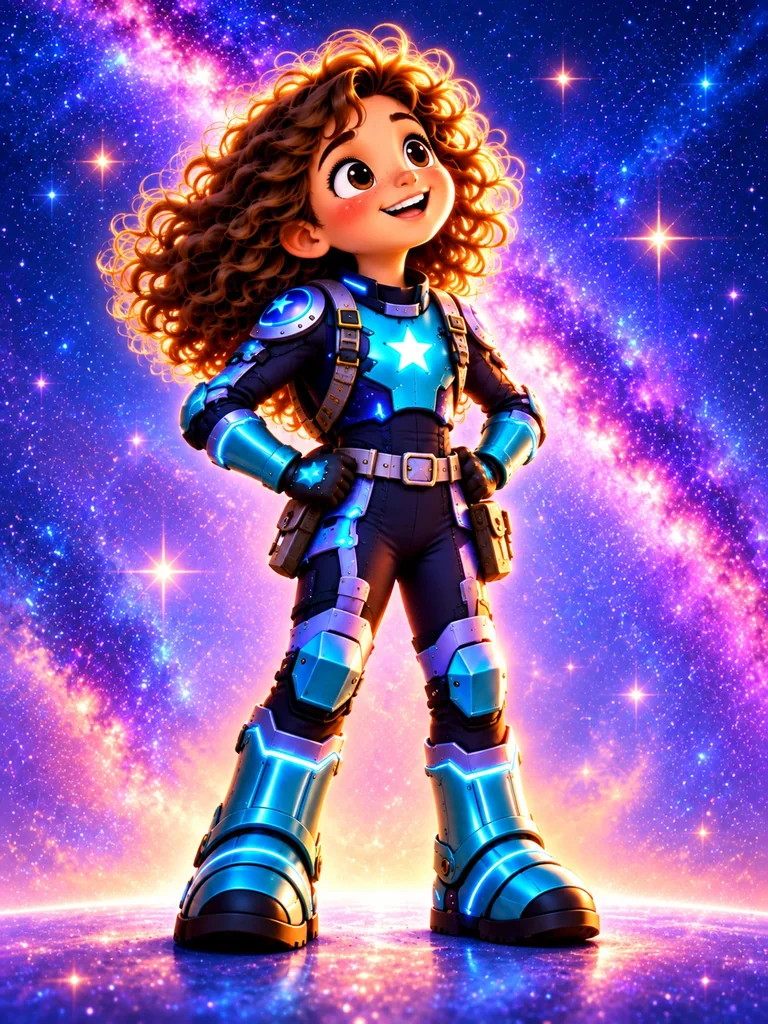
Nebula
Explorer
- Curly brown hair
- Teal and dark structured suit, with shoulder and torso pieces
- Dark gloves, belt and waist structure, knee and leg panels
- Large dark boots with bright cyan illuminated trim
- A star motif that returns on the suit
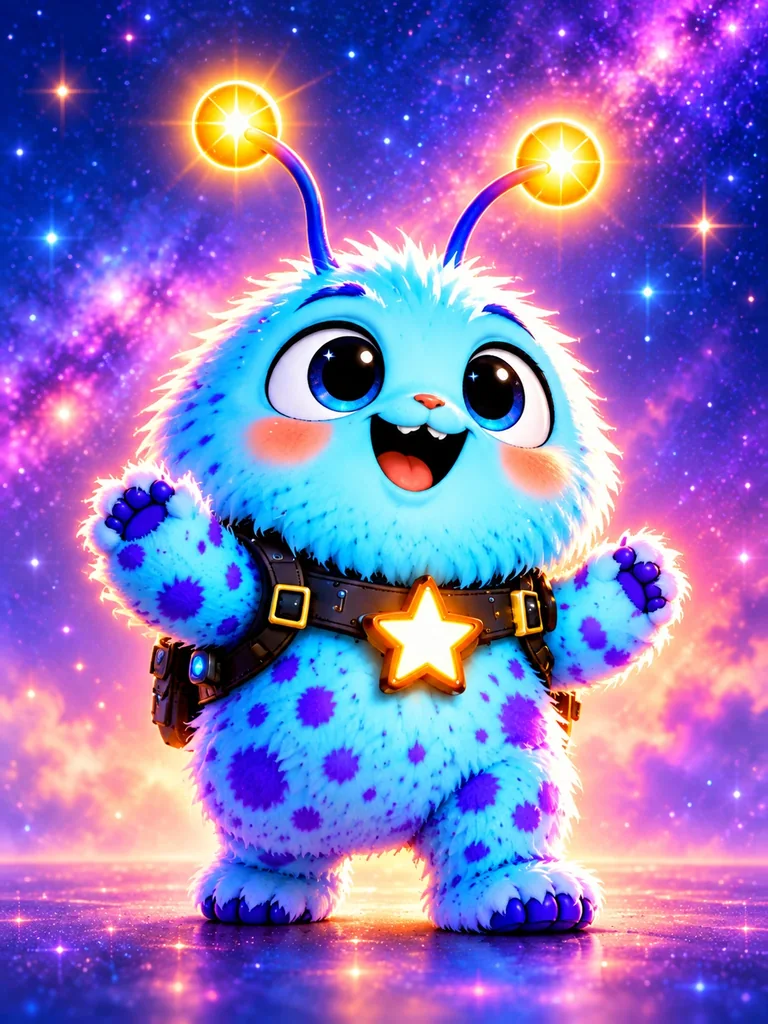
Quibbit
Companion
- Small, fluffy and blue, with purple markings
- Glowing antennae that carry his mood
- Belt and a glowing star at the waist
- Does not use ordinary spoken dialogue: chirps, squeaks, gestures and body language instead
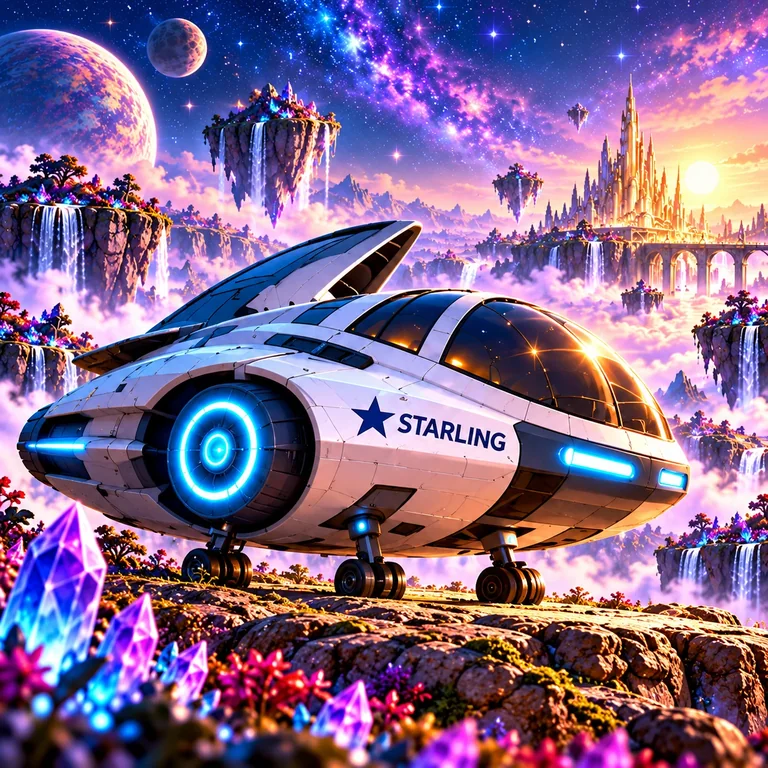
Starling
Spacecraft
- White and silver body with a front canopy window
- Blue illuminated ring and engine detail
- STARLING identity on the hull
- A living, adaptive spacecraft that stays non-speaking
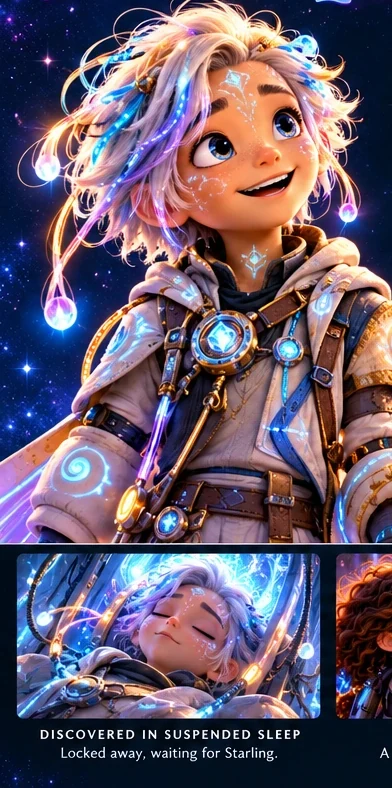
Zylas
Book Two — development in progress
- Pale, silver-white tousled hair with luminous blue and pink strands
- Blue and white markings and warm amber eyes
- Cream and tan fantasy-tech clothing with glowing crystal details
Zylas shows how a new character is added without breaking the established visual universe: the new design borrows the world’s colours and materials, then adds its own identity.
02 Manuscript
The words come with working notes.
A working manuscript is more than prose. Alongside the words sit notes about what a scene is for, how a character should behave, what must stay consistent, where the page should turn and what the artwork needs to show.
Earlier idea, current direction, why it changed
Book One, Chapter 1: the first signal
A bright light suddenly shot across the sky.
Then a sharp silver flash streaked across the valley and touched the tallest crystal tower below the ridge.
More visual. It gives the first signal a proper cinematic moment.
Book One, Chapter 4: the bridge
Nebula nearly fell but pulled herself back up.
Quibbit caught Nebula’s pack strap and helped her back onto the living-light bridge.
Give Quibbit a genuine hero moment.
Book One. Reconstructed from the final manuscript and development decisions: they show the kind of changes considered, not dated original draft marks.
A working page, with margin notes
Book Two — development in progress · Chapter One working page
A different light appears at the edge of the map. Not normal gold. Not ordinary white. It pulses once, twice, then disappears.
First interruption. End the page on uncertainty so the reader must turn.
Reduce visual complexity: mostly dark projection with one anomalous light.
Nebula wonders whether she imagined it. Quibbit’s reaction says otherwise. As she begins to close the compass, the light returns.
Use Quibbit’s body language to confirm the event without explanation.
Do not make this frightening. It is strange and compelling.
A louder hum comes from deep inside Starling. A light appears beside her entrance. ‘I think she wants us inside.’ Quibbit answers with a less confident ‘…Quib.’
Nebula standing with the compass, Quibbit close to her boot, the illuminated entrance ahead.
Balance uncertainty with a small Quibbit humour beat. Starling stays non-speaking.
03 Storyboard
Catch the problems while they’re cheap.
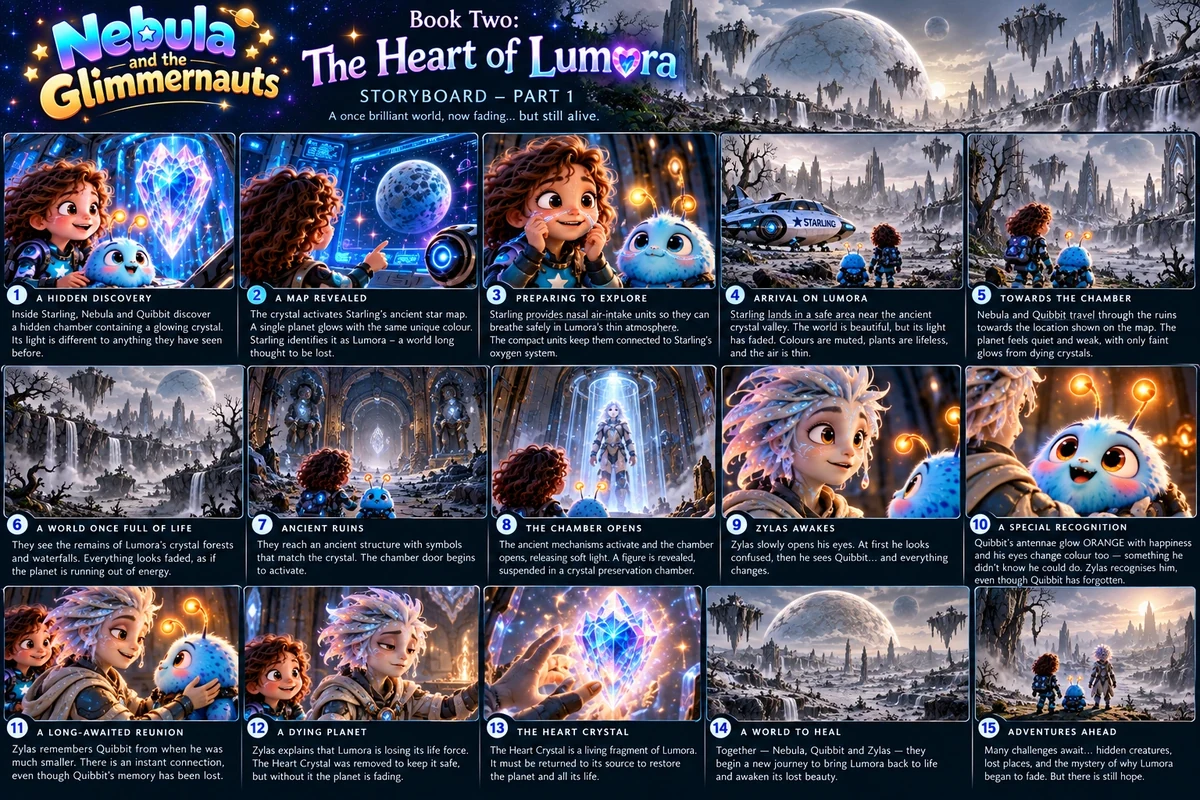
Storyboards allow major sequencing, continuity and visual problems to be identified before final artwork and page production become expensive to change. Is the order of events clear? Does each picture say what the scene needs it to say? Does one image give away something too early?
This sheet follows the real development beats of Book Two’s opening: a discovery inside Starling, a map that reveals a world, preparing to explore, arrival on a faded planet, and the way to an ancient chamber. The rest is left for the book.
04 Revisions
Ideas are tested, and sometimes replaced.
The strongest idea rarely arrives first. Earlier directions are kept in red strike-through, with the current decision underneath, so the trail stays visible instead of making the story look as if every decision existed from the beginning.
Starling
Starling is an old spacecraft containing a hidden chamber, and could explain what is happening.
Starling is living and adaptive, and stays non-speaking. She communicates through light, sound, movement, displays and changing architecture.
The hidden chamber becomes part of Starling’s own mystery, and it keeps her mysterious and consistent with the intended character.
The opening
Begin by travelling directly toward the dying planet.
Begin at Glimmer Ridge with the Book One compass and an unexplained light that Starling recognises.
The sequel now grows directly out of Book One.
The signal
The map simply displays a route to the next planet.
The light behaves differently from normal routes and ultimately shows a direct connection to Starling.
The first mystery becomes “Why does Starling know it?” rather than merely “Where does it go?”
The Heart Crystal
The Heart Crystal is quickly found and identified.
The crystal is first experienced indirectly, through a hum, Starling’s reactions and a hidden space. Its identity is discovered later.
This preserves mystery and connects the crystal to Starling’s forgotten history.
Quibbit
Quibbit discovers Lumora as a completely new world.
Quibbit has a forgotten childhood connection to Lumora, and the world begins to stir memories.
Lumora becomes emotionally personal.
Zylas
Zylas mainly explains Quibbit’s past and remains on Lumora.
Zylas recognises Quibbit and becomes a continuing character.
He carries missing pieces of the Glimmernaut and Starling history without knowing everything.
Some questions are deliberately left open, so that later chapters can earn the strongest answers rather than forcing them too early.
05 Continuity
The details children notice.
Continuity is often invisible when it works and immediately obvious when it does not. Before a page is approved it gets questions like these:
- Does the illustration match the words?
- Is Nebula wearing the correct outfit?
- Does Quibbit communicate consistently?
- Does Starling retain the approved design?
- Is the scene shown in the correct sequence?
- Has an illustration revealed information too early?
- Nebula
- hair, suit, boots, equipment, proportions
- Quibbit
- antennae, markings, belt and star structure, non-verbal behaviour
- Starling
- exterior form, canopy and window, hull identity, adaptive nature
- The world
- crystals, landscapes, colour palette, chronology
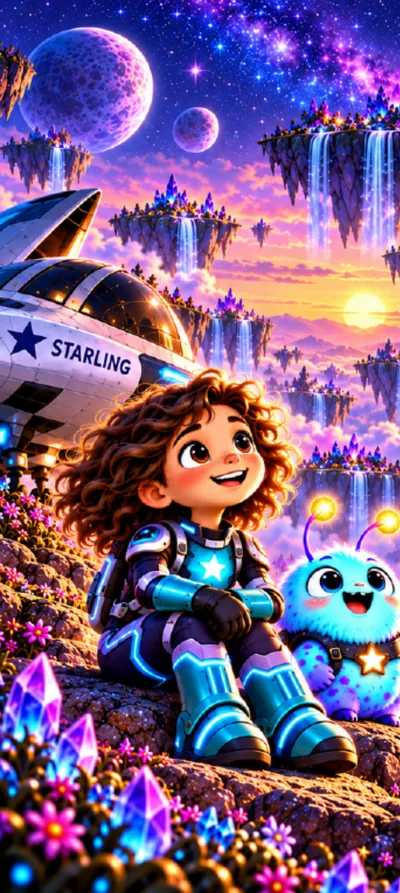
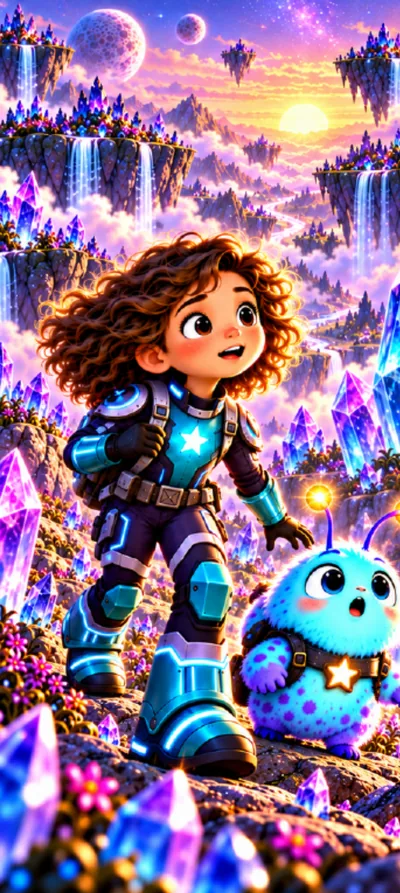
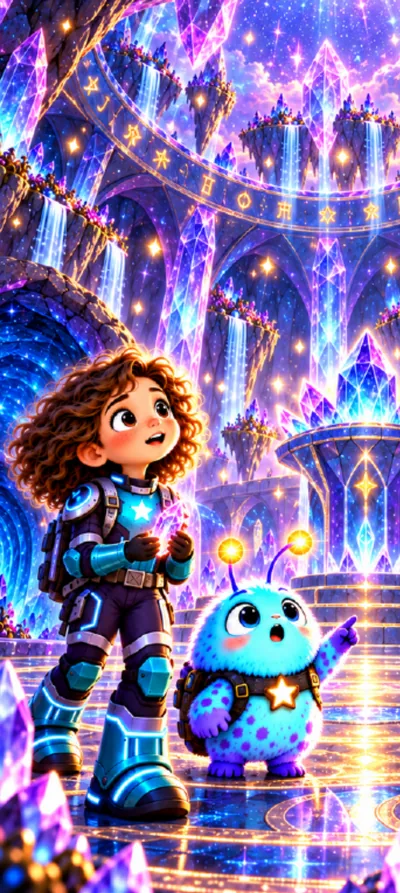
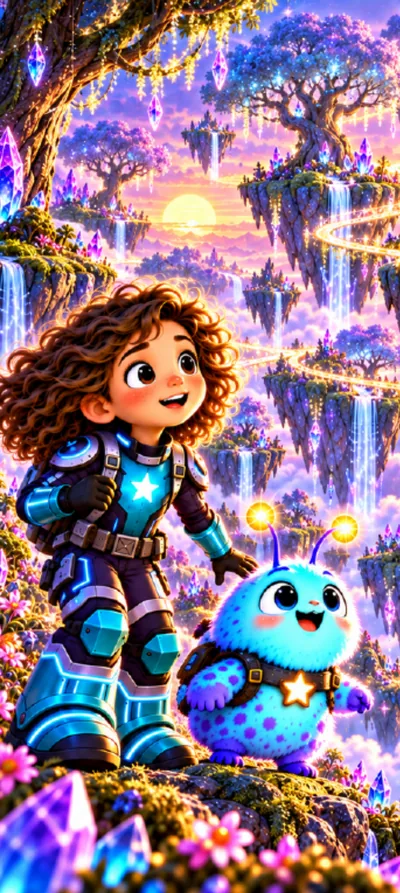
Nebula across four finished pages: the same suit, star emblem and proportions.
06 Page design
A page is not just a picture with text on top.
A finished illustrated page is designed. The picture, the words and the empty space each have a job. Four finished pages from Book One:
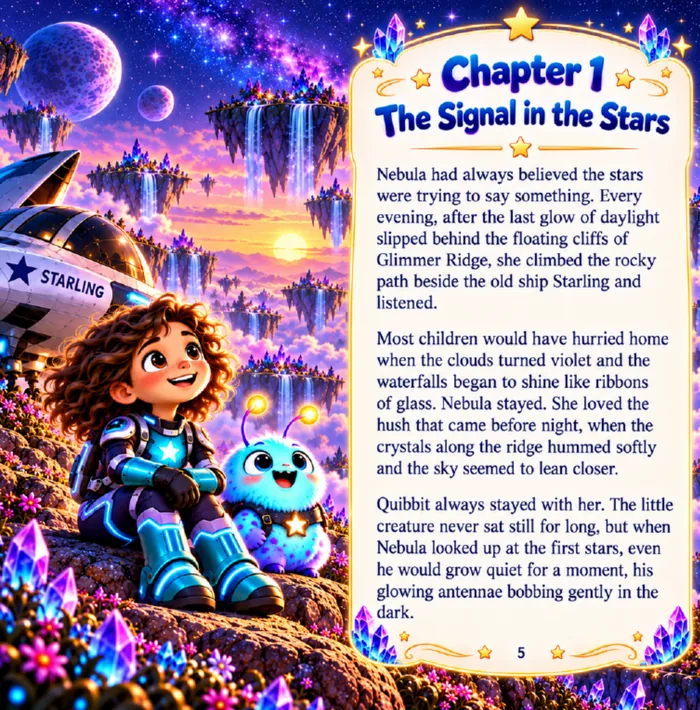
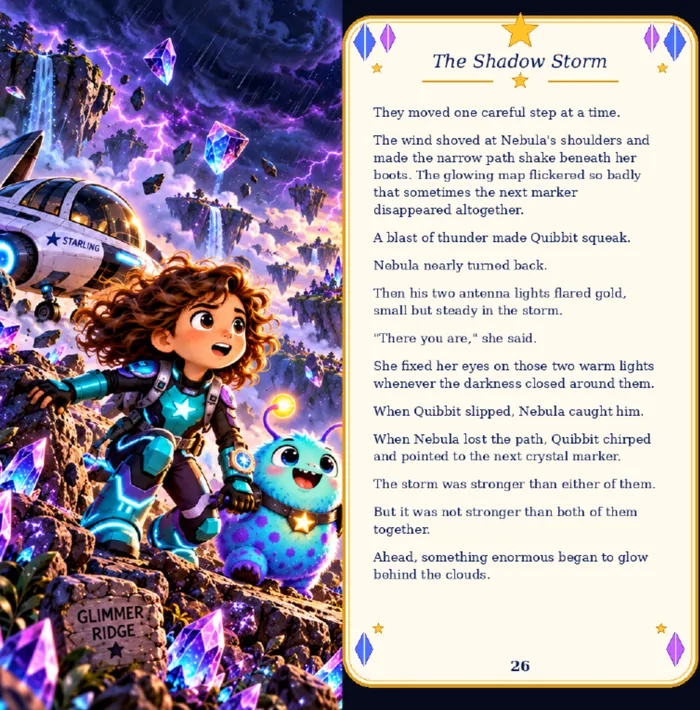
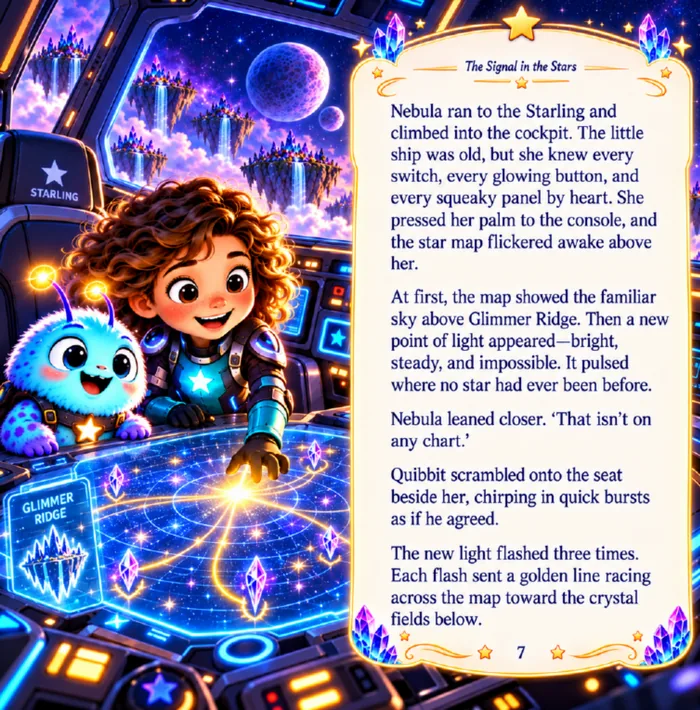
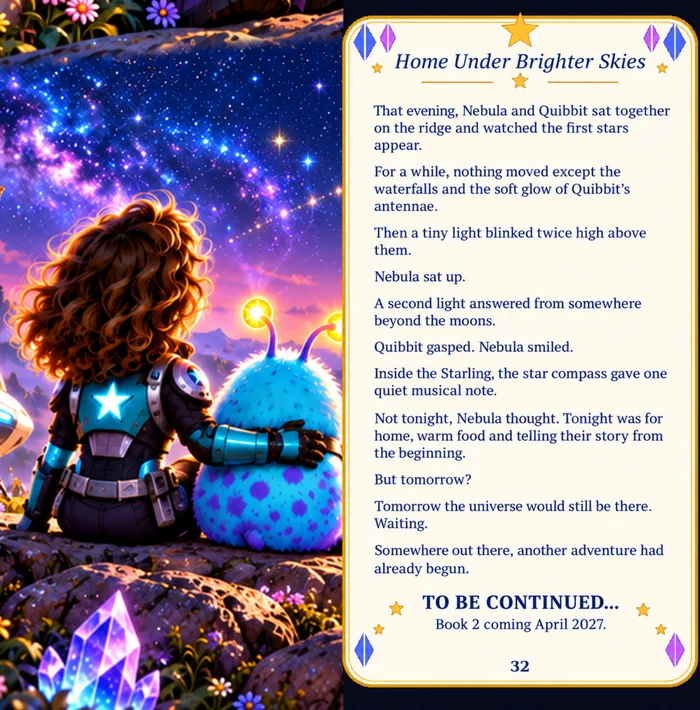
Visual hierarchy, border treatment and readability change from page to page: the chapter openings get a decorated heading and border, the busier story pages a calmer panel. Digital and print are different too: a printed page keeps one fixed trim size, while an ebook page can be viewed on screens of very different sizes, so type and picture have to work in both.
Page-by-page production thinking
One chapter is broken into beats. For each, the plan records the manuscript beat, what the illustration must show, what the page is for and what must stay hidden. Three examples from Book Two’s Chapter One:
Chapter opening
- Manuscript beat
- The stars above Glimmer Ridge never look quite the same to Nebula after her first adventure.
- Illustration
- A wide, cinematic nightscape: Nebula and Quibbit small beneath the huge sky, Starling resting behind them.
- Page function
- Establish Book One continuity and a calm starting point. Leave generous sky for the title and opening text.
- Continuity & spoiler control
- Do not hint at the new planet or make Starling look unusual yet.
Page-turn beat: the blink
- Manuscript beat
- A different light appears at the edge of the map and pulses twice.
- Illustration
- Mostly dark projection with one anomalous light, the characters smaller in the frame.
- Page function
- The first interruption. End the page on uncertainty so the reader must turn.
- Continuity & spoiler control
- The signal needs a repeatable visual identity.
Hero page: Starling answers
- Manuscript beat
- A low musical note comes from Starling. One window lights, then another, then another.
- Illustration
- A large hero illustration of Starling coming alive behind Nebula and Quibbit, with lights travelling through her.
- Page function
- The first unmistakable sign that Starling recognises the event.
- Continuity & spoiler control
- Starling keeps the exterior design from Book One. No face, no eyes, no redesign.
- Wide
- Character
- Golden wonder
- Expansion
- Dark interruption
- Reaction
- Near darkness
- Starling hero image
- Close mystery
- Invitation
- Reader point of view
- Cliffhanger
The plan also reminds its authors that not every sentence belongs on top of a busy illustration. Some beats need generous negative space, and if the prose is too dense, the answer is to add space rather than shrink the type.
07 Trailer
Beyond the page.
A book can continue beyond its printed pages. The trailer uses artwork, pacing, sound and movement to give the story another way to reach readers. For future projects it is one of the media Starbridge is exploring, where it suits the story.
The trailer includes sound and only plays when you press play.
08 Publication
From working files to a published book.
- 01Final manuscript preparation
- 02Artwork checking
- 03Page layout
- 04Digital conversion
- 05Kindle and device checks
- 06Metadata
- 07Categories
- 08Store description
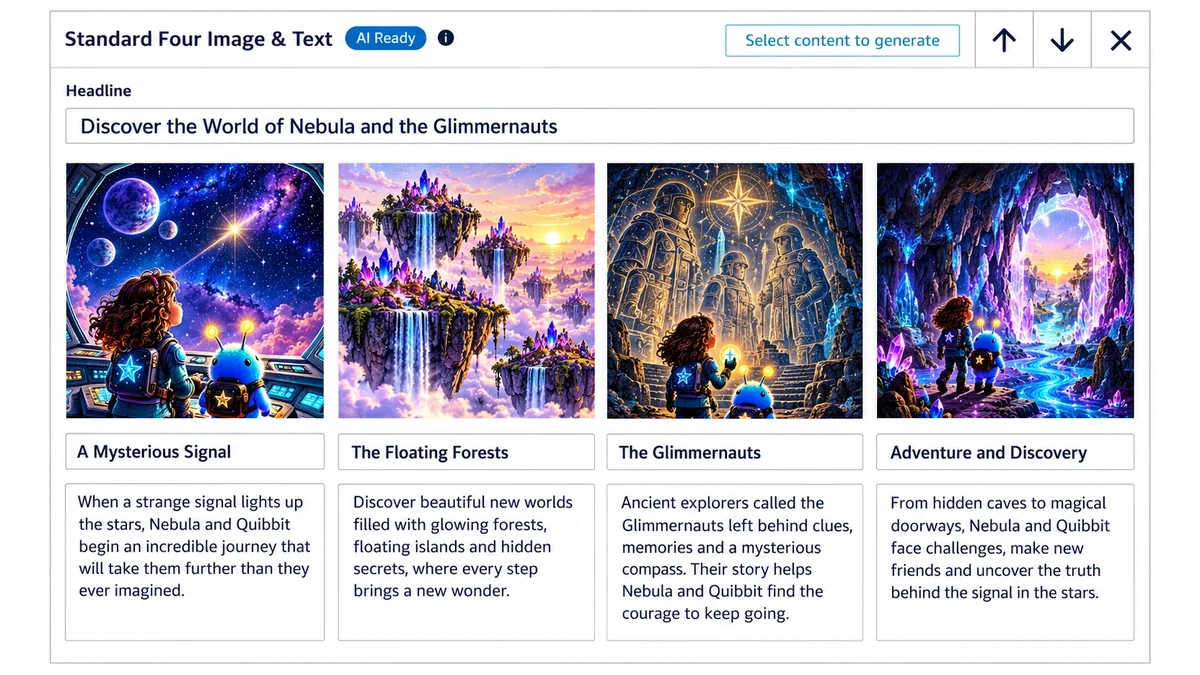
- 09Promotional and A+ content
- 10Publication
Book One is out now and live on Amazon. Choose the Kindle eBook or paperback, or read with an eligible Kindle Unlimited subscription.
Kindle Unlimited reading uses the Kindle edition and needs an eligible subscription; availability is subject to Amazon’s current listing. View current price and availability on Amazon.
09 For authors
What could this look like for your story?
Not every book needs every stage. Some projects may arrive with a strong finished manuscript and need careful design and publishing preparation. Others may need help shaping the story, developing characters, planning scenes, maintaining illustration continuity or building a wider visual presentation around the book.
- Your manuscriptdevelopmental and structural feedback
- Your charactersplanning and visual continuity
- Your worldillustration direction and worldbuilding
- Your sequencestoryboarding where useful
- Your pagesdesign and formatting
- Your releasepublishing preparation and appropriate promotional material
This case study demonstrates the process through a real Starbridge project.
We are now accepting new author and story submissions. If you have a manuscript, illustrated project or story concept you would like Starbridge Media to review, tell us about your project and send us a sample using our author submission form.